.jpg)
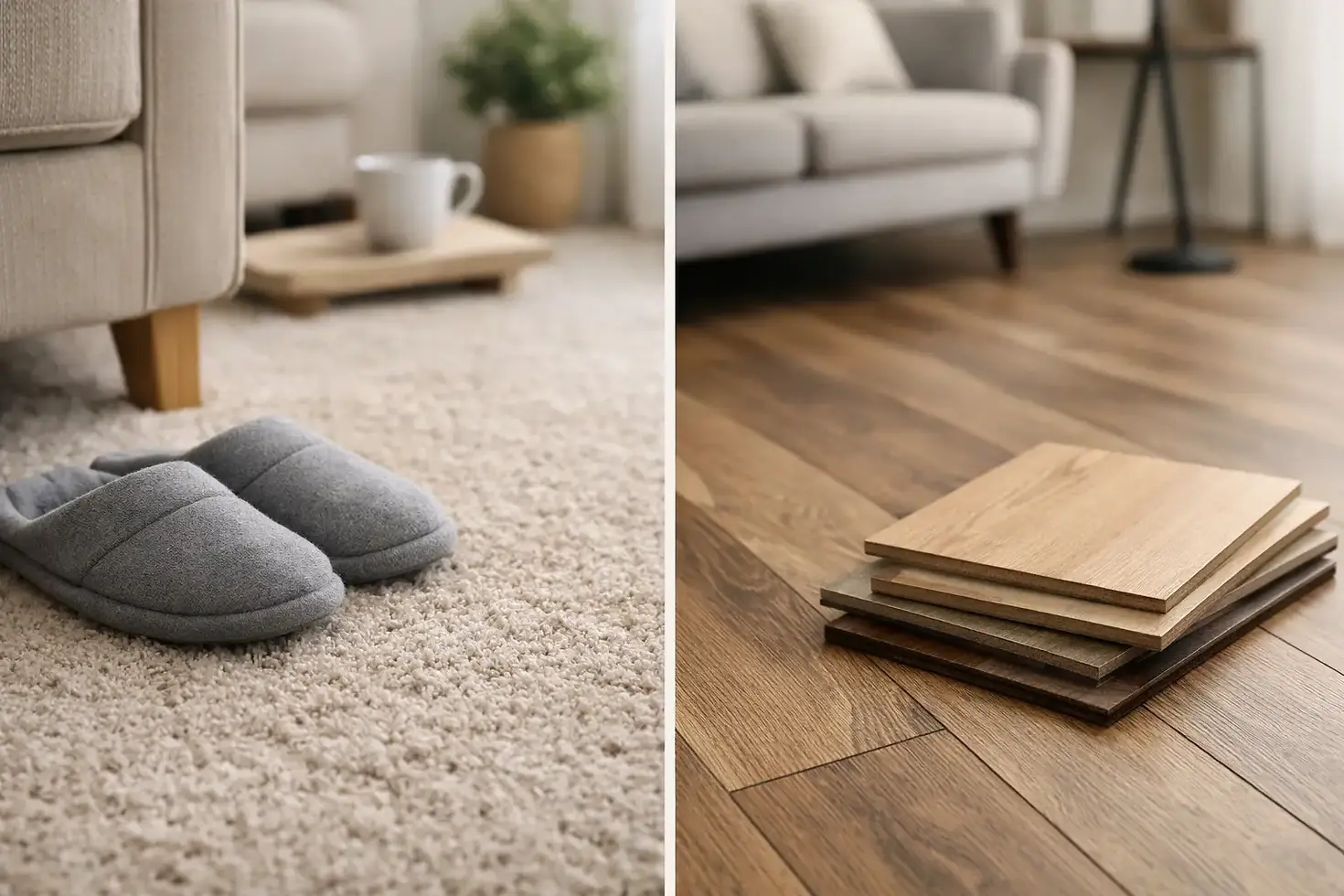
Carpet vs Laminate Flooring for Your Space
A cold Calgary morning makes the difference between carpet vs laminate flooring easy to feel. One gives you a warm, cushioned surface underfoot; the other offers a clean, hard-wearing finish that can handle a busy household. Both can be excellent choices, but they solve different problems. The right answer depends less on what looks best in a sample and more on who uses the room, how the space is maintained, and what you need the floor to do over time.
For homeowners, rental owners, and property managers, flooring is a practical decision as much as a style decision. Comfort, noise, pets, moisture, accessibility, replacement costs, and installation quality all deserve a place in the conversation.
Carpet vs Laminate Flooring: The Main Difference
Carpet is a soft textile floor covering installed over a cushion or pad. It creates warmth, reduces sound, and can make bedrooms, family rooms, and lower-level spaces feel more comfortable. Modern carpet comes in many fibers, pile styles, colors, and stain-resistant options, so it is far more versatile than the shag styles many people remember.
Laminate flooring is a multi-layer plank product with a durable printed surface designed to resemble wood, stone, or tile. It is typically installed as a floating floor, with planks that lock together over an underlayment. Laminate offers a consistent, easy-to-clean surface and is a popular choice for living areas, hallways, bedrooms, and rental units.
Neither material wins in every room. Carpet tends to win on softness and sound control. Laminate often wins on day-to-day cleanup and scratch resistance. The best choice comes from matching the product to the room's real demands.
Choose Carpet When Comfort and Quiet Matter Most
Carpet remains a strong choice for spaces where people relax, sleep, or spend time on the floor. In bedrooms, it gives bare feet a warmer landing place and helps create a quieter, more restful atmosphere. In a family room, it can make the space feel inviting while giving young children a softer surface for play.
Sound absorption is one of carpet's most valuable benefits. Hard surfaces allow footsteps, dropped toys, rolling chairs, and voices to travel more easily. Carpet and a quality pad help absorb that sound. This can be especially helpful in upstairs bedrooms, apartment units, senior living residences, and multi-family properties where reducing noise between spaces matters.
Carpet can also be a sensible option for aging in place. A well-chosen low-pile carpet provides traction and a more forgiving surface than a hard floor in the event of a fall. The details matter, though. Very thick or loose carpet may make it harder for walkers, wheelchairs, or mobility aids to move smoothly. For these situations, a low-profile style with secure installation is usually the better fit.
What to Consider Before Selecting Carpet
Carpet does require regular vacuuming and occasional professional cleaning. Although many current carpet products include effective stain and soil protection, spills should still be handled promptly. Pet accidents, mud, and heavy traffic can be challenging if the carpet fiber or pile is not suited to the household.
For pet owners, look for durable fibers and a style that does not snag easily. A looped construction can catch claws in some cases, while a textured cut pile is often a practical alternative. Color also matters. A mid-tone, heathered carpet can be more forgiving than a very light solid shade in a busy home.
Carpet is generally not the right material for bathrooms, laundry rooms, or areas with frequent moisture. Basements need a closer look as well. If the space has a history of dampness, moisture should be addressed before any new flooring is installed.
Choose Laminate for Easy Cleanup and Everyday Durability
Laminate makes sense when you want the visual appeal of wood with a surface that stands up well to active daily use. Its wear layer helps resist scratches, scuffs, and fading, making it a practical option for households with children, pets, or frequent visitors. It is also popular in rental properties because it provides a polished look without the maintenance expectations of natural hardwood.
Cleaning laminate is straightforward. Regular sweeping or vacuuming with a hard-floor setting removes grit that can wear on the surface. For deeper cleaning, use a lightly damp microfiber mop and a cleaner approved for laminate. The goal is controlled moisture, not a soaking-wet mop.
Laminate can create a continuous, coordinated look through a main floor, living room, hallway, or bedroom. With today's realistic wood visuals, it can suit everything from a traditional home to a contemporary condo. It is also less likely than carpet to hold dust, pet hair, and everyday debris, which some households appreciate.
Moisture Is Laminate's Important Trade-Off
Not all laminate is designed for the same level of water exposure. Some products have improved water resistance, but that does not mean they are waterproof. Standing water can work into seams, cause edges to swell, and damage the core beneath the decorative surface.
For kitchens, entryways, and powder rooms, the product selection and installation details are critical. A water-resistant laminate may work well in a carefully managed kitchen, but a home with frequent wet boots, overflowing pet bowls, or young children may be better served by another flooring category. Bathrooms and laundry rooms are usually better suited to products designed for full moisture exposure.
Laminate is also harder underfoot than carpet. That can be a benefit for cleaning and durability, but it may not be the most comfortable choice for someone who stands for long periods or wants a softer, quieter room. Area rugs can add comfort, though they do not replace the sound reduction of wall-to-wall carpet.
Cost Depends on More Than the Material
It is tempting to compare flooring by the price of the product alone, but installed cost tells a more useful story. Carpet pricing includes the carpet, pad, removal of existing flooring when needed, preparation of the subfloor, and installation. Laminate costs may include underlayment, moisture barriers, trims, transitions, baseboard work, and subfloor preparation.
A less expensive product can become costly if the existing floor needs significant repair. Conversely, investing in a better pad under carpet or a higher-quality laminate can improve comfort and long-term performance. For property managers, choosing a durable product that reduces turnover repairs may provide better value than selecting the lowest upfront price.
Professional installation is particularly important with laminate. Floors must be flat enough for the locking system to perform properly, perimeter expansion gaps must be maintained, and transitions need to be finished cleanly. With carpet, a quality installation affects how well seams wear, how the carpet lays, and how secure it feels underfoot.
Room-by-Room Guidance for Homes and Properties
Bedrooms are often ideal for carpet because warmth, comfort, and quiet are usually the priorities. Laminate can work well in bedrooms for customers who prefer a hard surface or need easier cleanup for pets, but it may feel cooler and sound louder without rugs.
Living rooms can go either way. Choose carpet for a cozy, sound-absorbing room where family comfort is the focus. Choose laminate for a more streamlined look, easier maintenance, and better resistance to everyday traffic. In open-concept homes, laminate can create visual continuity between the living area, dining area, and hallway.
Hallways, entry-adjacent spaces, and rental-unit main areas often benefit from laminate's durable surface, provided moisture is controlled. For upstairs suites, apartments, and senior residences, carpet can be valuable for noise reduction and comfort. In commercial settings, the decision should account for traffic patterns, cleaning schedules, safety requirements, and the possibility of replacing sections over time.
Questions That Lead to a Better Flooring Decision
Before choosing between carpet and laminate, think about the room's role rather than just its appearance. How often will it be cleaned? Are pets likely to scratch, shed, or have accidents there? Will the room see wet footwear? Does sound transfer to another unit or floor below? Is someone in the home concerned about joint comfort, mobility, or slip resistance?
It also helps to bring a few real-life details to a flooring consultation: photos of the room, measurements if available, a sample of nearby cabinetry or paint, and an honest picture of daily use. A floor that looks beautiful in a showroom should also make sense after a snowy walk, a dropped drink, or a busy weekend with family.
At Millhouse Carpet and Flooring, the most useful recommendations start with those everyday details. A flooring choice should make your home, unit, or commercial space easier to live with, not give you another surface to worry about.



Comments